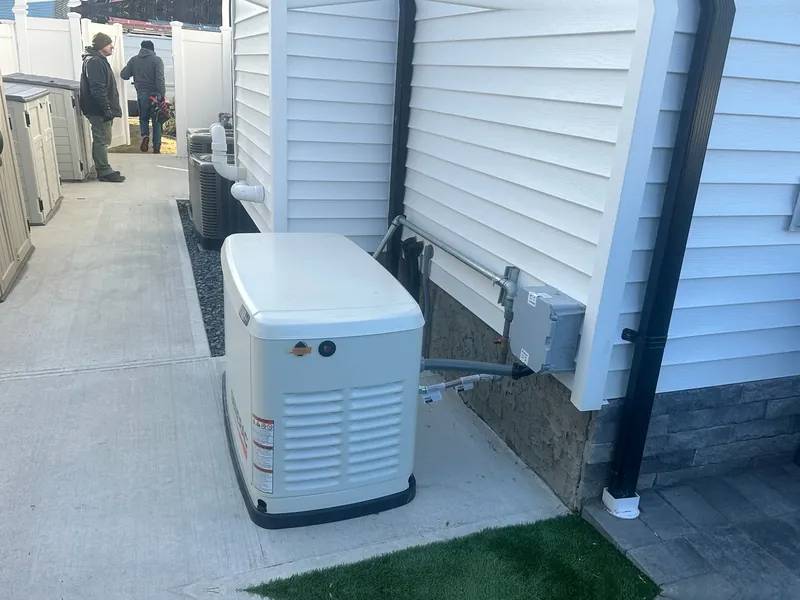
Ask any Long Island homeowner what they remember about Hurricane Sandy, Tropical Storm Isaias, or the last nor'easter to hit the South Shore, and they'll tell you the same thing: it wasn't the wind — it was the days without power. Long Island's combination of coastal weather, dense tree cover, and overhead distribution lines makes prolonged outages a near-certainty every year. A backup generator isn't a luxury here. It's basic home infrastructure.
Why Long Island Outages Hit Harder
PSEG Long Island and its predecessors have logged some of the longest restoration times in the Northeast after major storms. The reasons are structural:
- Overhead distribution — most Long Island neighborhoods still rely on pole-mounted lines that are vulnerable to falling trees and limbs
- Coastal exposure — saltwater flooding damages substations, transformers, and meter pans, requiring full replacement rather than simple repair
- Aging infrastructure — large portions of the grid date back decades and were never designed for today's demand
- Geography — the island layout means crews can only reach certain areas after others are restored
For homeowners, the practical result is the same every storm season: a multi-day outage is not a question of if, but when.
Standby vs. Portable: The Real Difference
Most homeowners shopping for backup power start by comparing portable generators to standby (whole-house) systems. Here's the honest breakdown:
Portable Generators
- Cost $500 to $2,000 up front
- Require gasoline (which is often unavailable during widespread outages)
- Need to be manually started and connected via extension cords or a manual transfer switch
- Power only a few critical circuits — fridge, a few lights, maybe a window AC
- Must be operated outside, away from windows, for carbon monoxide safety
- Loud, and require refueling every few hours
Standby (Whole-House) Generators
- Cost $5,000 to $15,000 installed
- Run on natural gas or propane — no refueling during outages
- Start automatically within 10 to 30 seconds of an outage
- Power your entire home, including HVAC, well pumps, and sump pumps
- Self-test weekly to confirm readiness
- Quiet, weather-enclosed, and out of sight
For homes with medical equipment, electric heat, well water, finished basements with sump pumps, or anyone who can't easily relocate during an outage, a standby generator is the only setup that actually solves the problem.
Recommended Standby Generator Brands
MTL Electric installs every major standby generator brand on the market. The right one for your home depends on size, fuel type, and warranty preferences.
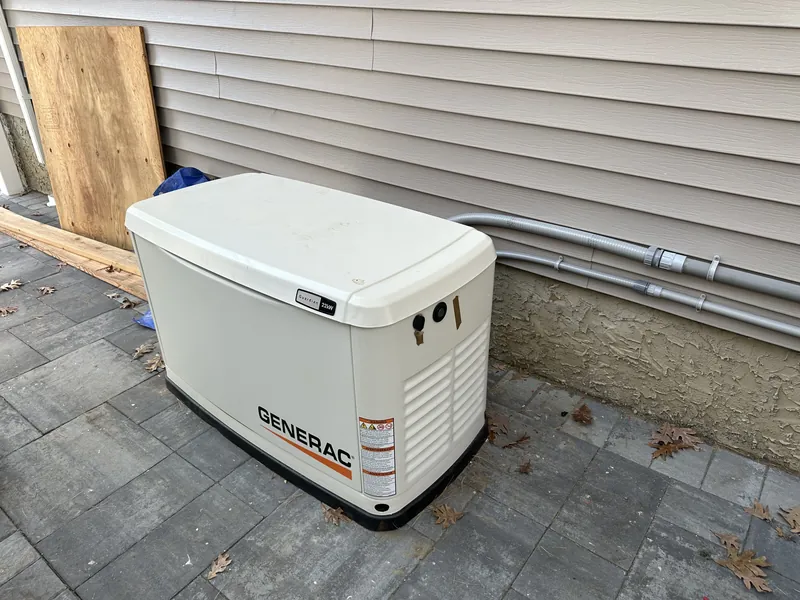
- Generac Guardian — The most common standby generator in the U.S. Reliable, well-supported, and available in sizes from 7.5 kW to 26 kW. Best dealer network on Long Island for parts and service.
- Kohler — Premium build quality, exceptionally quiet operation, and strong warranty coverage. A favorite for larger homes on the North Shore.
- Briggs & Stratton — Solid mid-tier option with good value and dependable performance.
- Cummins — Heavy-duty commercial-grade construction, ideal for larger estates or homes with very high electrical demand.
What Size Generator Does Your Home Need?
Sizing is where most generator quotes go wrong. Too small and you'll have to choose which appliances to run; too large and you've overpaid for capacity you'll never use. Here's a practical guide for Long Island homes:
- 7–10 kW — essentials only: fridge, lights, well pump, sump pump, a few outlets
- 14–18 kW — most 2,000–3,000 sq ft homes with central AC, electric range, and standard loads
- 20–22 kW — larger homes (3,000–5,000 sq ft) with two AC zones, electric dryer, and multiple major appliances
- 24–26+ kW — luxury homes with pools, hot tubs, EV charging, or multiple HVAC systems
A proper load calculation by a licensed electrician is the only way to size accurately. We perform this assessment as part of every free quote.
Natural Gas vs. Propane: Which Fuel Is Right?
Long Island homes typically run standby generators on one of two fuels:
- Natural gas — Best option if your home already has gas service. No tank, unlimited fuel during outages, lower per-hour fuel cost. We coordinate with National Grid for the line tap and pressure test.
- Propane — The right choice for homes without natural gas, especially on the East End. Requires an above- or below-ground tank (typically 250–500 gallons). Higher BTU output than natural gas, so your generator runs slightly more efficiently.
Both options keep the generator running indefinitely without the gas-station chaos that follows every major Long Island storm.
The Installation Process
A typical whole-house generator installation takes one to three days, depending on complexity:
- Site assessment — load calculation, fuel source check, generator location, code clearances
- Permitting — electrical and plumbing permits from your local building department
- Pad installation — concrete or composite pad sized to the generator
- Electrical work — installation of the automatic transfer switch, connection to your service panel, and breaker configuration
- Fuel line connection — gas line tap or propane tank line, including pressure testing
- Commissioning — start-up, configuration, and full simulated outage test
- Inspection — electrical and plumbing sign-off from local authorities
- Homeowner walkthrough — operation, monthly self-tests, and maintenance scheduling
Annual Maintenance: Don't Skip It
Standby generators are reliable — but only when maintained. A generator that hasn't been serviced is a generator that won't start when you need it most. MTL Electric offers annual maintenance contracts that include:
- Oil and filter change
- Air filter and spark plug inspection or replacement
- Battery test and replacement as needed
- Load bank testing to confirm full-power operation
- Transfer switch inspection
- Software and firmware updates (on smart-monitored units)
Insurance, Resale, and Peace of Mind
A properly installed whole-house generator typically:
- Reduces homeowner insurance premiums on many policies, especially for homes in flood zones
- Increases resale value — Long Island buyers actively seek homes with backup power
- Protects against costly damage — frozen pipes, food spoilage, basement flooding from failed sump pumps
- Allows you to age in place safely, with reliable heat, cooling, and medical equipment
The Bottom Line
If you live on Long Island and you've ever lost power for more than 24 hours, you already know the value of backup power. The question isn't whether you need a generator — it's whether you want to be ready for the next storm or scramble through it like the last one.
MTL Electric installs whole-house generators across Suffolk and Nassau County. We size correctly, install cleanly, and stand behind every job. Request a free generator quote and we'll come out to assess your home — no obligation.