Electric vehicle adoption on Long Island has surged, and most EV owners quickly discover the same thing: relying on public charging is a hassle, and the standard wall outlet that came with your car barely keeps up. A properly installed Level 2 home charger pays you back in convenience every single day. Here's everything Suffolk and Nassau County homeowners need to know before scheduling an installation.
Level 1 vs. Level 2: Why Home Chargers Matter
Every EV ships with a Level 1 charger — the cord that plugs into a standard 120-volt outlet. It works, but it adds only 3 to 5 miles of range per hour. For a daily Long Island commuter putting 40–60 miles on the odometer, Level 1 charging often can't fully replenish the battery overnight.
A Level 2 charger runs on 240 volts — the same voltage as your electric dryer or range. It delivers 25 to 40 miles of range per hour, which means a full overnight charge is realistic for virtually any EV on the market. For most homeowners, Level 2 is the only setup that makes daily EV ownership genuinely effortless.
Which Level 2 Charger Should You Buy?
MTL Electric installs every major Level 2 charger sold in the U.S. The "best" one depends on your vehicle, your panel, and how much smart-app functionality you want. Here are the units we install most often on Long Island:
- Tesla Wall Connector — The gold standard for Tesla owners. Up to 48 amps, sleek design, and seamless integration with the Tesla app. Works with non-Tesla EVs via the included J1772 adapter on newer models.
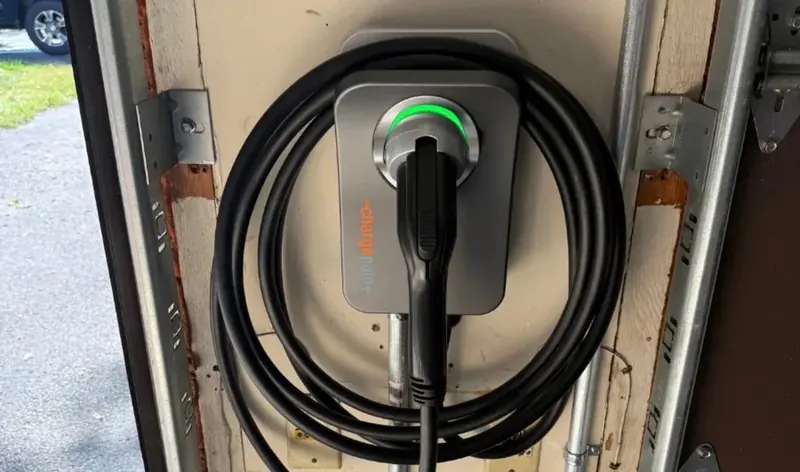
- ChargePoint Home Flex — Universally compatible (J1772), 16–50 amp adjustable output, Wi-Fi enabled, and one of the most reliable units we install.
- JuiceBox 40 — A favorite for homeowners who want detailed energy reporting. 40-amp output, smart scheduling, and Alexa integration.
- Grizzl-E Classic — Built like a tank, weatherproof, and one of the most affordable robust Level 2 options. Great for outdoor garages.
- Emporia EV Charger — Excellent value with built-in load management — perfect for homes that can't easily upgrade the panel.
- Wallbox Pulsar Plus — Compact, powerful (up to 48 amps), and one of the smartest units on the market with full app control.
What Your Electrical System Needs
A Level 2 charger is a serious electrical load. Before installation, your home needs:
- A dedicated 240V circuit — typically 40 to 60 amps depending on the charger
- Properly sized wiring — usually 6 AWG copper for 50-amp circuits, 4 AWG for 60-amp
- GFCI protection — required by the National Electrical Code for EV charging circuits
- Adequate panel capacity — your existing service must have enough headroom for the new load
- A safe mounting location — garage, exterior wall, or driveway pedestal
Will You Need a Panel Upgrade First?
This is the question that catches most Long Island homeowners off guard. If your home still has a 100-amp main panel — common in houses built before the 1990s — adding a 40 or 50-amp EV charger circuit often exceeds the safe capacity of your service.
The fix is a service upgrade to 200 amps, which is the modern standard. It's an added cost, but it future-proofs your home for everything else you're likely to add over the next decade: a heat pump, a hot tub, a backup generator, or an addition. Many of our customers find the panel upgrade pays for itself in flexibility within a few years.
If your panel is already 200 amps and has open breaker space, installation is typically straightforward.
How Much Does Home EV Charger Installation Cost on Long Island?
Total cost depends on three things: the charger itself, the complexity of the wiring run, and whether you need a panel upgrade.
- Charger unit: $400 to $1,200 depending on brand and features
- Installation labor (no panel upgrade): $500 to $2,000 — driven mostly by the wiring distance between your panel and the charger location
- Panel upgrade (if needed): $2,500 to $4,500 for a 100A-to-200A service upgrade, including permits and utility coordination
- Permits and inspection: typically $150 to $400 depending on township
Most Long Island installations on a 200-amp panel land between $1,200 and $2,500 total, including the charger.
Permits, Inspections, and PSEG-LI
Every EV charger installation in Suffolk and Nassau County requires a permit from your local building department and a final inspection. MTL Electric handles both. We file the permit, pull the inspection, and make sure the installation is fully code-compliant — protecting your insurance coverage and your home's resale value.
It's also worth checking PSEG Long Island's current EV charger rebate program. The utility periodically offers rebates on smart Level 2 chargers and time-of-use rates that significantly lower your charging cost. We'll point you to the latest programs when we quote your job.
What to Expect on Installation Day
A typical Level 2 charger installation takes 3 to 5 hours:
- Power disconnect at the main panel for safety
- Wiring run from the panel to the charger location — through the basement, attic, or conduit on exterior walls
- Dedicated breaker installation in your panel
- Charger mounting at your preferred height and location
- Connection and energization
- Testing with your vehicle to confirm charge rate and connectivity
- Walkthrough of the charger app and features
If a panel upgrade is part of the project, plan for a full day — sometimes two — including utility coordination for the meter pull.
Frequently Asked Questions
Can I install an EV charger outdoors?
Yes — most Level 2 chargers are weather-rated (NEMA 4 or better). Outdoor installations are common in Long Island driveways and detached garages. We use weatherproof conduit and disconnects to keep the installation safe and code-compliant.
How long will the charger last?
Quality Level 2 chargers from the brands above typically last 10+ years with no maintenance. Most carry 3-year manufacturer warranties; some (like the Tesla Wall Connector) offer 4 years.
Can I install the charger myself?
It's not worth the risk. EV charger circuits involve high amperage, GFCI requirements, and code compliance that affect your insurance and home value. A DIY install that fails inspection can also disqualify utility rebates. A licensed electrician is the right call.
What if I move? Does the charger come with me?
Most chargers are hardwired but can be removed and reinstalled at a new home. A NEMA 14-50 plug-in installation makes the charger fully portable — talk to us about whether that's the right approach for your situation.
The Bottom Line
Installing a Level 2 EV charger at home transforms EV ownership from "manageable" to "effortless." For Long Island homeowners, the smart move is to start with an honest assessment of your panel — because the right install up front saves money, headaches, and code issues down the road.
MTL Electric has installed Level 2 chargers across Suffolk County and Nassau County for every major EV on the market. We'll help you pick the right charger, handle permits and inspections, and complete the installation cleanly the first time. Request a free quote today.