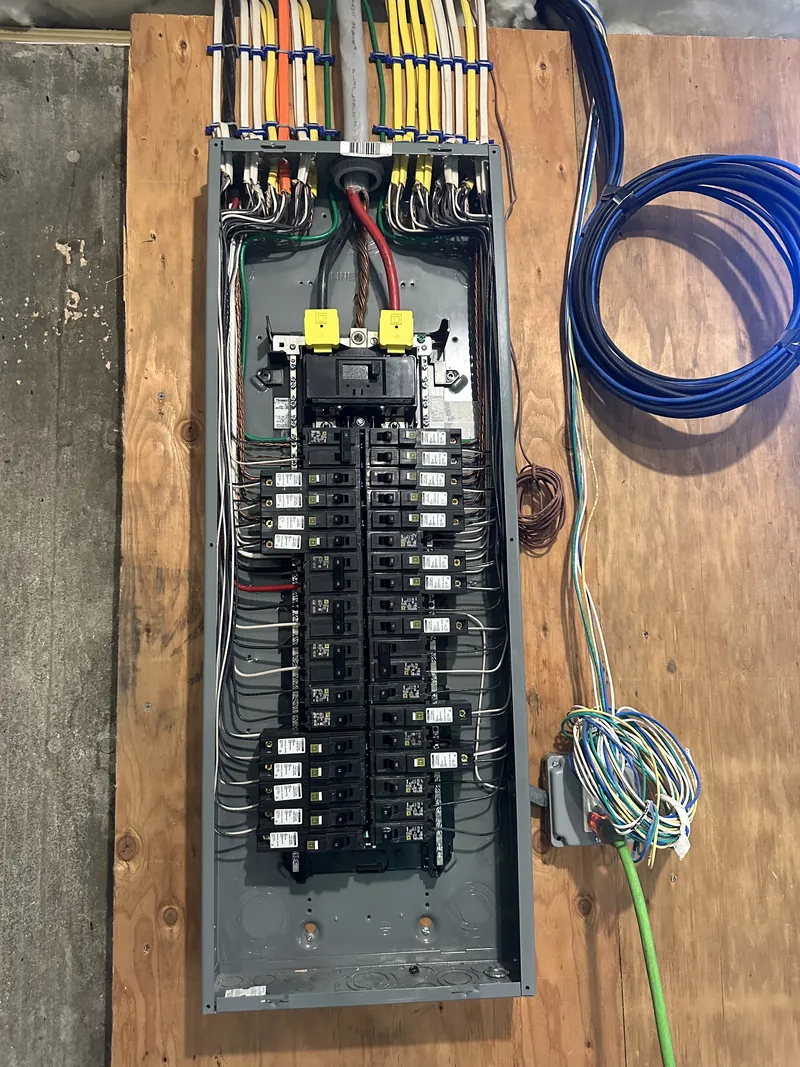
Every modern Long Island home runs on more electricity than the one before it. EVs, heat pumps, induction ranges, hot tubs, home offices, smart appliances — the load keeps climbing. The trouble is, most homes still have the same electrical service they were built with: 100 amps for houses built before the 1990s, sometimes even 60 amps in older Cape Cods. Here's a homeowner-friendly guide to understanding what your "electrical load" actually is, how to estimate it, and when it's time to upgrade.
What "Electrical Load" Really Means
Three numbers matter, and they're often confused:
- Volts (V) — the "pressure" of electricity. Most U.S. homes have 120V outlets and 240V service to the panel.
- Amps (A) — the "flow rate" of electricity. Your main breaker (typically 100A or 200A) tells you how many amps your service can deliver simultaneously.
- Watts (W) — the actual work being done. Watts = Volts × Amps. A 1,500-watt space heater on a 120V outlet draws 12.5 amps.
"Electrical load" refers to the total demand on your home's wiring at any given moment. Your service capacity is fixed — your load varies hour by hour as appliances cycle on and off.
How to Read Your Panel
Open your panel cover and look at the main breaker at the top (or sometimes the side). It will be labeled with the service size:
- 60A or 100A — common in homes built before 1990. Often inadequate for modern loads.
- 150A — a middle option seen occasionally in 1980s–1990s construction.
- 200A — the current standard for new construction and modern upgrades. Sufficient for most homes including EV chargers and heat pumps.
- 400A — luxury homes, large estates, or homes with very high demand (multiple EVs, pool, hot tub, large HVAC).
Note that the sum of your individual breakers can — and usually does — exceed your main breaker's rating. That's intentional. Not every breaker is at full load simultaneously. The main protects against the entire house drawing more than your service can deliver at once.
A Simplified Load Calculation
The National Electrical Code (NEC) defines a precise load calculation method that licensed electricians use to size service. Here's a simplified version you can run yourself to get a rough estimate.
Step 1: General Lighting and Receptacle Load
NEC assigns 3 watts per square foot for general lighting and outlets. A 2,000 sq ft home = 6,000 watts.
Step 2: Add Small Appliance and Laundry Circuits
Code requires at least two 1,500-watt kitchen small-appliance circuits and one 1,500-watt laundry circuit. That's 4,500 watts for nearly every home.
Step 3: Add Major Fixed Appliances
Add the nameplate rating of each major appliance:
- Electric range: 8,000–12,000 W
- Electric oven (separate): 4,000–6,000 W
- Electric dryer: 5,000 W (NEC minimum)
- Electric water heater: 4,500 W
- Dishwasher: 1,200 W
- Disposal: 900 W
- Microwave (built-in): 1,500 W
- Central AC: 3,500–6,000 W per ton (a 3-ton system ≈ 12,000 W)
- Heat pump: 5,000–10,000 W
Step 4: Apply the Demand Factor
The NEC recognizes that not everything runs at once. For most residential calculations:
- First 10,000 W at 100%
- Remainder at 40%
Step 5: Add Largest A/C or Heating Load
The larger of your air conditioning or electric heating load is added at 100% after the demand factor — because heating and cooling don't run simultaneously.
Step 6: Convert to Amps
Divide your total watts by 240V to get the amperage your service must support. If your calculated load is 28,800 watts, that's 120 amps — which means a 100A service is undersized and a 200A is appropriate.
This is a simplification of the real NEC calculation, which includes additional factors for EV chargers, hot tubs, and specific equipment. A licensed electrician performs the full calculation as part of any service upgrade quote.
Loads That Catch Homeowners Off Guard
When customers ask us why their 100A panel suddenly isn't enough, the answer is almost always one of these:
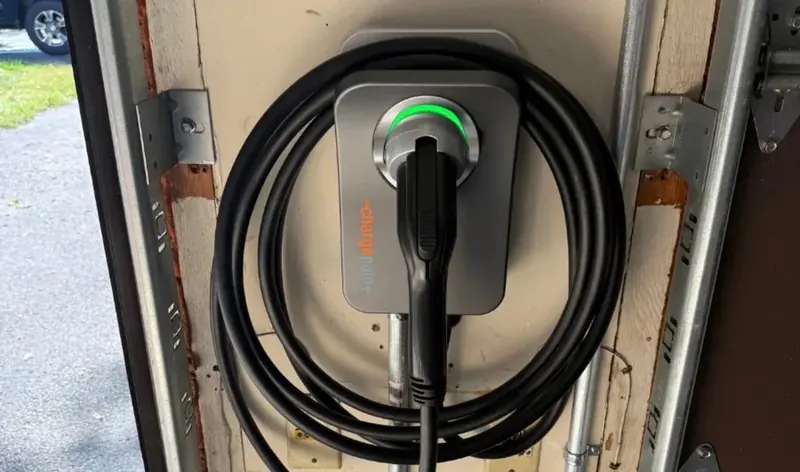
- EV charger — a Level 2 charger draws 32–48 amps continuously while charging. See our full EV charger guide for the details.
- Heat pump or mini-split system — replacing oil or gas heat with electric heating can add 30–60 amps of new demand
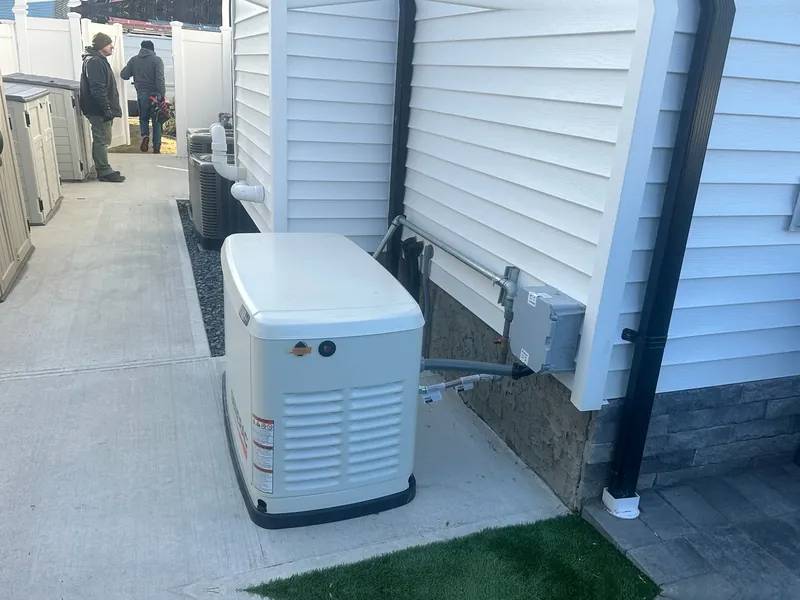
- Whole-house generator transfer switch — doesn't add load, but proper integration requires panel headroom
- Hot tub or pool equipment — typically 40–50 amps dedicated
- Induction range — higher continuous draw than a traditional electric range
- Tankless water heater (electric) — surprisingly demanding, often 80+ amps when active
- Home addition — square footage = more lighting and receptacle load, plus often a second HVAC zone
Signs Your Home Is at Capacity
You don't need to do the math to know your panel is maxed out. Your home tells you:
- Breakers trip when multiple appliances run simultaneously — the AC kicks on while the microwave is running and a breaker pops
- Lights dim when major appliances start — voltage drop from a strained service
- No open breaker slots in your panel — physically nowhere to add new circuits
- Tandem or "cheater" breakers everywhere — previous installers cramming circuits where they don't belong
- Warm or hot main breaker — the service is running hard, all the time
- Need to choose which appliances to run together to avoid trips
For a deeper look at when these warning signs cross into "upgrade now" territory, read our 5 warning signs article.
100 Amps vs. 200 Amps: The Real Difference
Doubling your service from 100A to 200A isn't just "twice the power." It's the threshold that separates:
- 100A — adequate for a modest home with gas heat, gas range, gas dryer, and no EV. No headroom for additions or modern upgrades.
- 200A — comfortable for most homes with electric appliances, central AC, an EV charger, a hot tub, or a future heat pump. The new construction standard for good reason.
If you're planning more than one major upgrade in the next 5 years (EV + heat pump, or EV + hot tub, or EV + addition), going to 200A first is almost always the right call. Our service upgrade page walks through the process and costs.
What About 400 Amps?
A 400A service is rare in standard residential, but appropriate when:
- The home is 5,000+ sq ft with multiple HVAC zones
- Two EV chargers are installed (or planned)
- There's a pool, hot tub, AND a workshop or detached structure
- An accessory dwelling unit (ADU) is being added
- Electric heat replaces oil or gas across a large home
If you're not sure, an honest load calc tells you whether 200A is plenty or whether you need to plan for more.
The Bottom Line
Understanding electrical load isn't about becoming an electrician — it's about making informed decisions before you sink money into appliances or upgrades that exceed what your home can deliver. The right answer is almost always: find out before you buy.
MTL Electric performs detailed load calculations as part of every service upgrade quote across Suffolk and Nassau County. Whether you're planning an EV charger, a heat pump, an addition, or just want to know where you stand, request a free assessment and we'll give you straight answers.